
How to Smoke a Cigar A Ritual and Enjoyment
For many, smoking a cigar is far more than a simple act; it’s a ritual. It’s a deliberate pause, a moment to reflect and appreciate the subtle flavors and rich aromas of finely crafted tobacco. Unlike a cigarette, a cigar is meant to be savored slowly, with the smoke held in the mouth to taste its complexity, not inhaled into the lungs. If you’re a newcomer to this world, the process might seem daunting, but with the right approach, you can unlock an enriching experience. This guide will walk you through the essential steps, ensuring your first cigar is a memorable one.
Choosing Your Cigar and Tools:
The journey begins before the first puff. The choices you make here will set the stage for your entire experience.
Selecting the Right Cigar:

For a beginner, the sheer variety of cigars can be overwhelming. Don’t worry; you don’t need to be an expert right away. Your best bet is to visit a tobacconist and ask for a recommendation. They have a wealth of knowledge and can guide you toward a cigar that suits your taste. A mild cigar is the perfect starting point, as it offers a gentle introduction to flavors without being too overpowering. The Robusto size is a popular choice for beginners; it’s not too long and provides a well-balanced smoke that typically lasts around 45 to 60 minutes.
Before you buy, inspect the cigar. Gently roll it between your fingers. It should feel firm but not hard, with no soft spots, which can indicate poor construction. The wrapper should be smooth, without any noticeable cracks or flakiness. A well-constructed cigar will burn evenly and provide a consistent flavor.
Essential Tools for the Smoker:
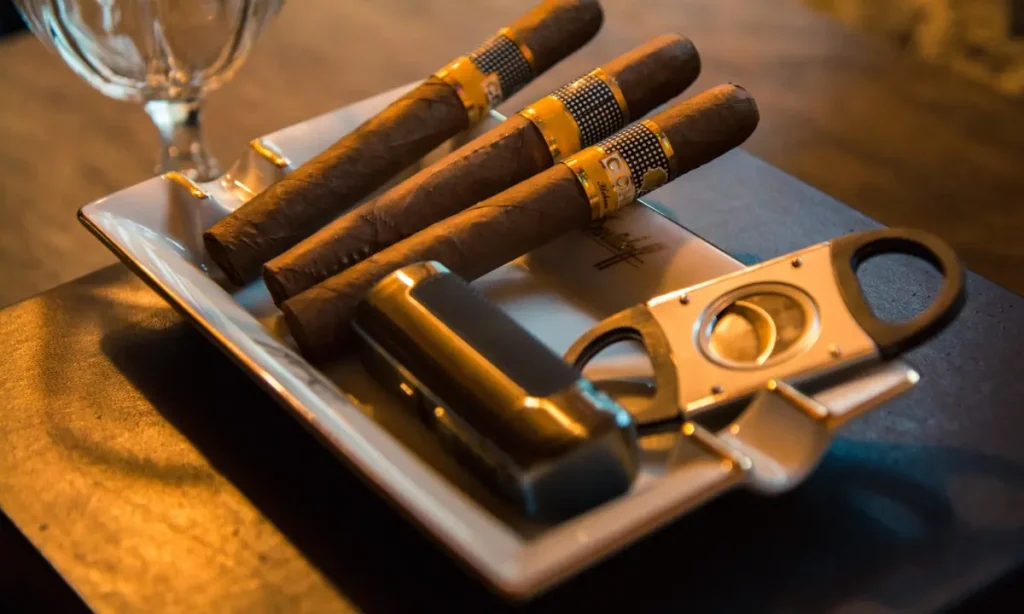
You’ll need a couple of key tools to prepare your cigar. Don’t be tempted to use whatever is at hand; the right tools are crucial for a good smoke.
- The Cutter: A guillotine or straight cutter is the most versatile and foolproof option for a beginner. It makes a clean, precise cut that helps ensure an even draw.
- The Lighter: A butane torch lighter is the preferred choice, as it provides a clean, odorless flame that won’t taint the cigar’s flavor. Long wooden matches are also an excellent option. Avoid using gas lighters, Zippo lighters, or anything that produces an odor, as the chemicals can taint the taste of the tobacco.
The Perfect Cut:
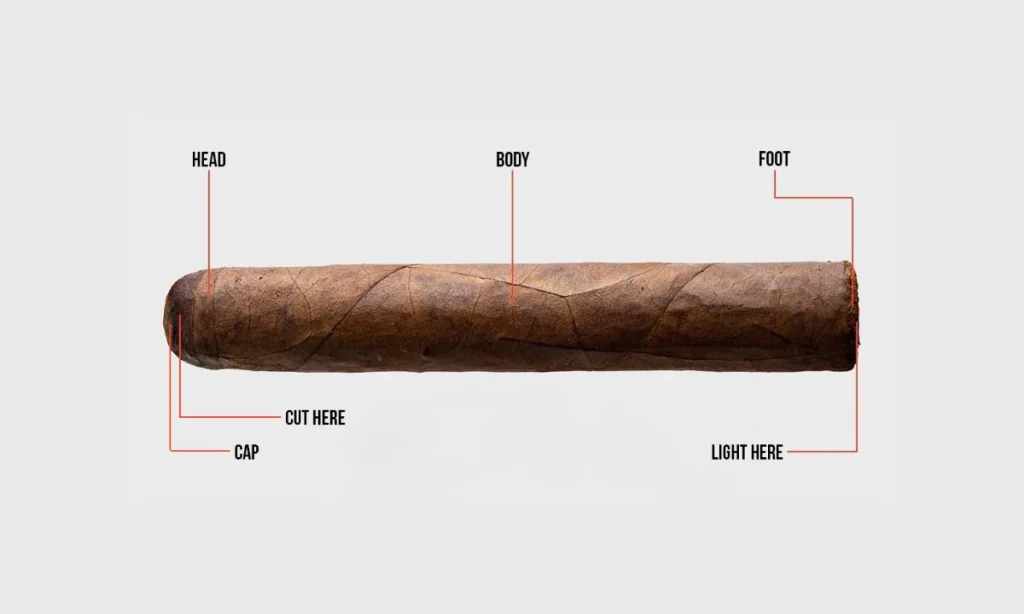
A good cut is critical for an enjoyable smoke. A bad cut can cause the wrapper to unravel or create a draw that is too tight, making it difficult to smoke.
- Identify the cap:The cap is the small, rounded piece of tobacco at the end of the cigar you’ll put in your mouth. Its purpose is to hold the wrapper together.
- Position the cutter: Place the cigar into your cutter and aim to slice just above the cap’s shoulder. A common mistake is to cut too much. Remember, you can always make a second, more minor cut if the draw is too tight, but you cannot put tobacco back on once it has been removed.
- Make a swift, confident cut: with one quick, fluid motion, clip the cap. A slow or hesitant cut can tear the wrapper, leading to a frustrating and uneven smoke.
The Lighting Ritual:
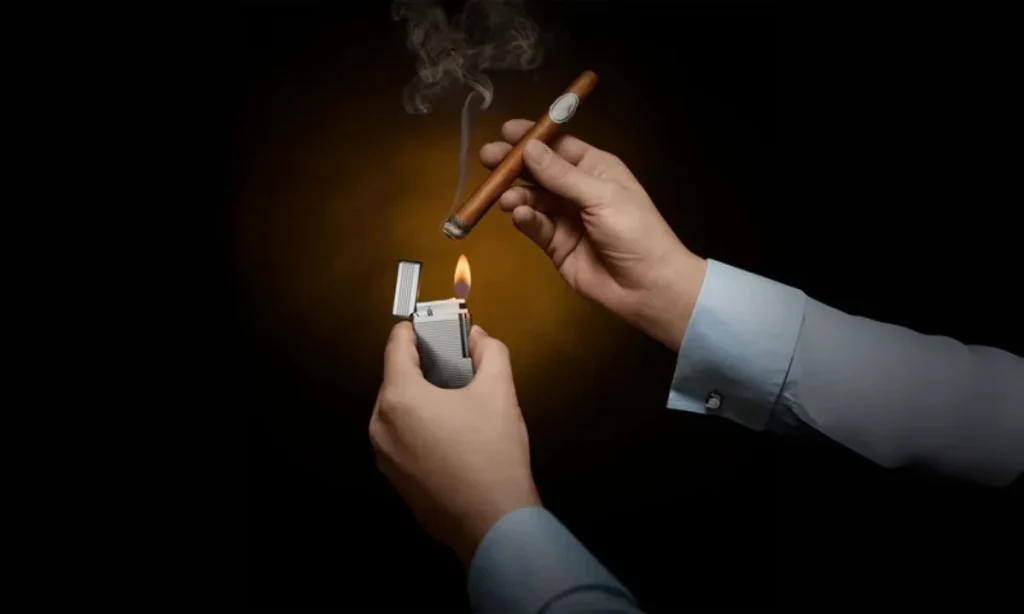
This is the most satisfying part of the process, the moment you bring the cigar to life.
- Toast the foot: Hold the flame below the foot (the end you light), not directly on it. Gently rotate the cigar to warm the tobacco evenly. You should see the tobacco begin to glow slightly around the edges. This prepares the cigar for a smooth, consistent burn.
- Light the cigar: Now, with the flame a short distance from the foot, take a few slow, gentle puffs while continuing to rotate the cigar. Don’t inhale. The goal is to get a uniform, even glow across the entire foot. You can check for evenness by blowing gently on the lit end; the glowing parts will stand out.
Smoking and Pacing:

The key to a good smoke is patience. Rushing will only lead to a bitter taste and a hot cigar.
- Puff, Don’t Inhale: This is the golden rule of cigar smoking. Draw the smoke into your mouth, hold it for a few seconds to let your palate savour the flavours, then exhale. You should never inhale cigar smoke into your lungs. The taste is meant to be experienced on the tongue and the back of the throat.
- Pace Yourself: Take a puff every 30 to 60 seconds. This pace allows the cigar to burn at a consistent temperature. Puffing too quickly can make the cigar hot and bitter, while puffing too slowly might cause it to go out. If your cigar goes out, relight it following the same gentle process.
- Manage the Ash: A long ash is a sign of a well-constructed cigar. The ash acts as an insulator, keeping the foot cooler and promoting a more even burn. Let the ash build up to about an inch before gently tapping it off into the ashtray. Don’t flick it like a cigarette.
- Remove the Band: The cigar band is typically placed with a special adhesive that loosens as the cigar heats up. Once you’ve smoked a little and the heat has done its work, you can gently peel the band off without tearing the wrapper.
Smoking and Pacing:
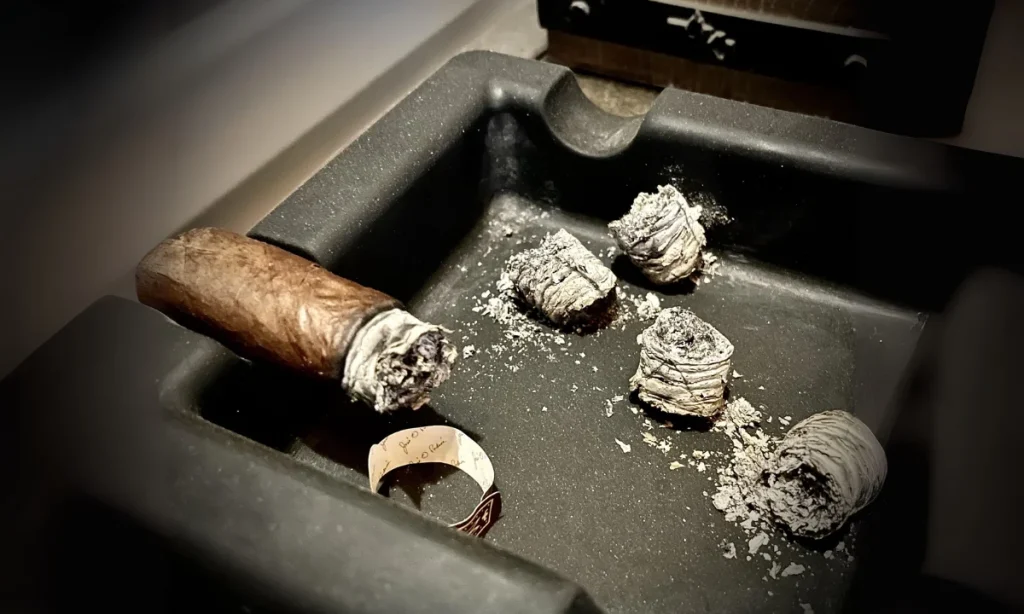
When you’re ready to finish, the last step is as important as the first.
- Let it go out naturally: when you are finished, place the cigar in the ashtray and let it extinguish itself. Do not stub it out. Doing so can release an unpleasant, lingering odour.
- Know when to stop: you don’t have to finish the entire cigar. The flavours often become harsher as you approach the end. The goal is enjoyment, and when the enjoyment stops, so should you.
Conclusion:
Embracing the ritual of the cigar is an experience that unfolds over time. With each smoke, you’ll learn more about your own preferences and the nuances of the tobacco. By following these steps, you’re not just lighting up a cigar; you’re participating in a timeless tradition of slowing down and appreciating the moment.